

Picture this. You and your spouse, partner, bestie, whoever that special someone is, are getting ready to go to a restaurant you’ve been dying to get into. The chef just got a James Beard award and thankfully you already had your reservations booked. You get to the restaurant and get to experience the atmosphere, the service, the cocktails, a full tasting menu and one of the most beautiful meals and evenings you have ever had. Simply magical.
I guarantee that not once during the evening you ever thought about what knife, pan or any other tool the chef or his team used during the evening to create that meal. Be honest, for you it doesn’t matter, it only matters to the one creating that meal and experience.
Clients feel the same way about cameras. Most of the time they don’t ask us what equipment we are using and they don’t need to. They come to us for the results and experience we deliver. What camera, lens, lights or anything else we use is our decision, not theirs.
Back in 2021 I switched from Canon to Sony because of Sony’s mirrorless system. At the time Sony was leading the charge of mirrorless technology and really I didn’t care about the camera or brand name, but what it did to change the way I worked.
Before mirrorless, I was using the DSLR’s for all of the photography I was creating. Great cameras, especially in the studio, but on location, especially with anything fast moving the idea was to shoot a lot and shoot fast. I would get about 50%-60% of the images back that would be usable. The others would miss focus or be casualties of trying to keep up with the action. Now with the amazing autofocus systems that are in today's mirrorless systems, I probably get 90%-95% of the images are usable.
When it comes to the video side of things, there are WAY more options and gear to consider. Camera bodies vary from small compact rigs all the way through full cine cameras that can cost more than a home. Lens choice, support rigs, sticks, the list goes on and each piece of gear has a role and is important to getting the job done.
I’m not really obsessed with gear, but I’m obsessed with results and this is where it all matters.
Now how does this apply to a real project? What we did for the APDA and upcoming heart transplant projects is a reflection of all of this.
Before we ever picked up a camera and got to set, we asked ourselves, what do we want this to look and feel like in the end. We weren't looking for some polished corporate video or social media post, we wanted something that felt intentional and more cinematic. This drove every decision we made.
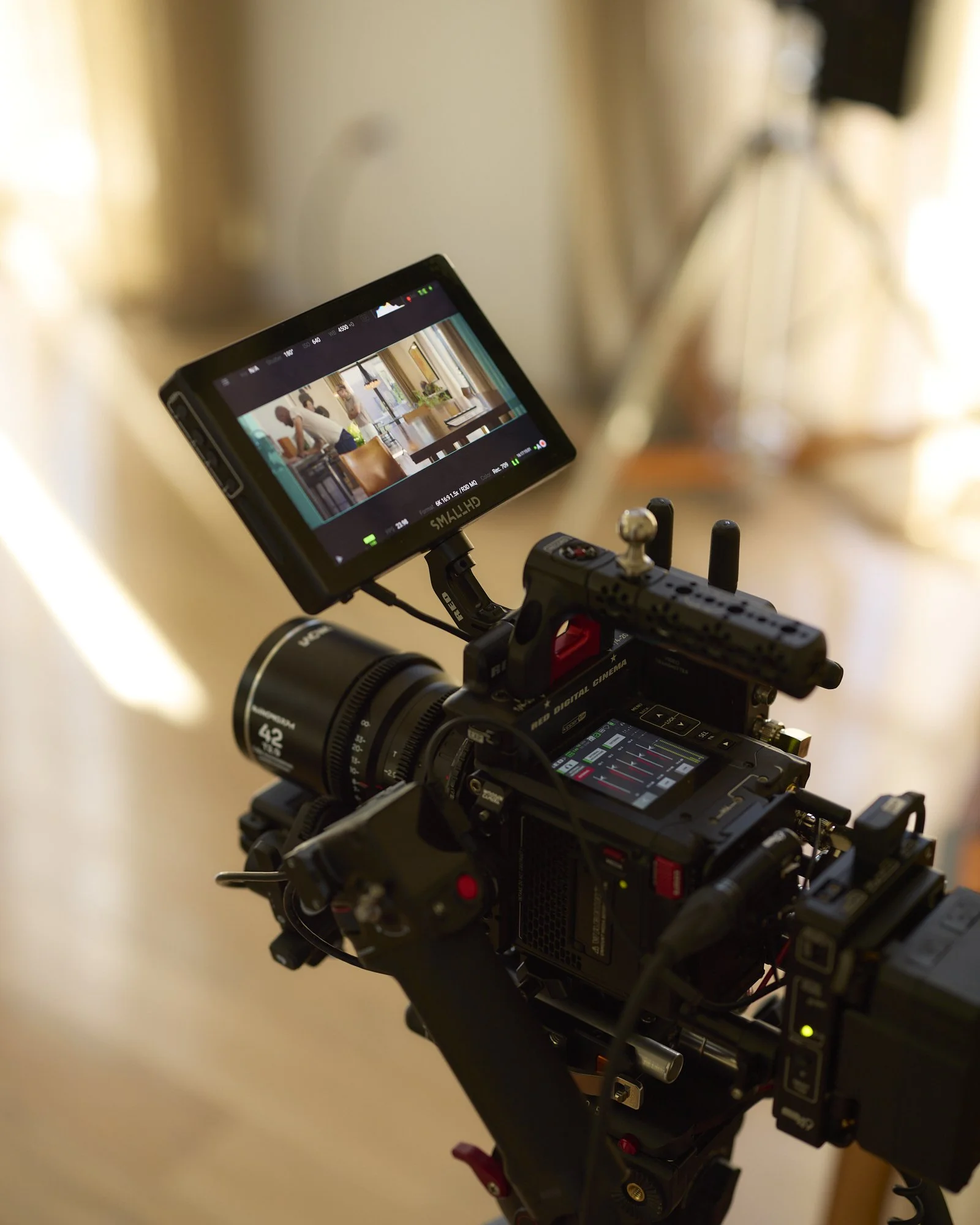
We decided to use a RED Komodo for a majority of the production on both projects. The RED camera has the color science we were looking for and the dynamic range we needed. The color grade was going to drive a lot of the emotion we were wanting to convey and the colorist needed these types of files to work from so that drove the decision.
The second big decision was the use of anamorphic lenses. These lenses have a unique quality to them and just a different look that comes from the traditional spherical glass most of us are familiar with. You also have to de-squeeze the image which gives it a wider width while also reducing the vertical height. This wider ratio forced us to be more intentional with our framing and it also changes how the audience feels while watching it.
None of these decisions were game day decisions, but rather were all thought out and intentionally decided upon from the start.
This is how we approach each project, start at the end and work backwards from there.
What do you want this project to look and feel like? How is the color grade going to impact that final look? What would a different camera and lens combo look like and what is really needed? All of this gets taken into consideration with my team and I. These are the tools in our “kitchen”.
This is the foundation for the work we do. Like anything else, start with a solid foundation and you have the beginnings of great work. If you neglect that and start with a weak foundation then it’s going to be an uphill battle each and every time. Much like which knife a chef uses, most of this doesn’t matter to the client directly, and it shouldn’t. That’s part of our job and what matters most is that the final work we deliver, and the experience of working with us is to the standard we set for ourselves.
A $30,000 camera in the wrong hands doesn’t make a great image, while a $100 camera in the right hands can still make something beautiful. Cameras don’t make beautiful imagery, people do.
I love cameras and can talk in depth about them for hours, but clients don’t hire cameras, they hire people. And that’s the thing to remember. Much like the chef who creates a magical evening through their food, it is never the knife that created the magic, but it was the dedication, heart and soul that was behind every decision before you ever stepped into that restaurant.