#18. Beyond the Brief: When to Shut Up.
I’ve talked about the project we did for the APDA, and I don’t want to sound like a broken record, but there’s something I learned during that project that changed how I approach interviews.
Before we ever got on set and turned on any camera’s, I told David about my mother.
Thirty years of living with Parkinson’s. Thirty years of uncertainty, challenges, falls, progression and facing each day with a strength and drive to keep living. My first conversation with David had nothing to do with the production we were working on. It was about letting David know that the guy that was going to be pointing a camera at him and asking him to share the hardest parts of his life understood the depth of what was being asked. Those early conversations built the foundation for everything we created after that.
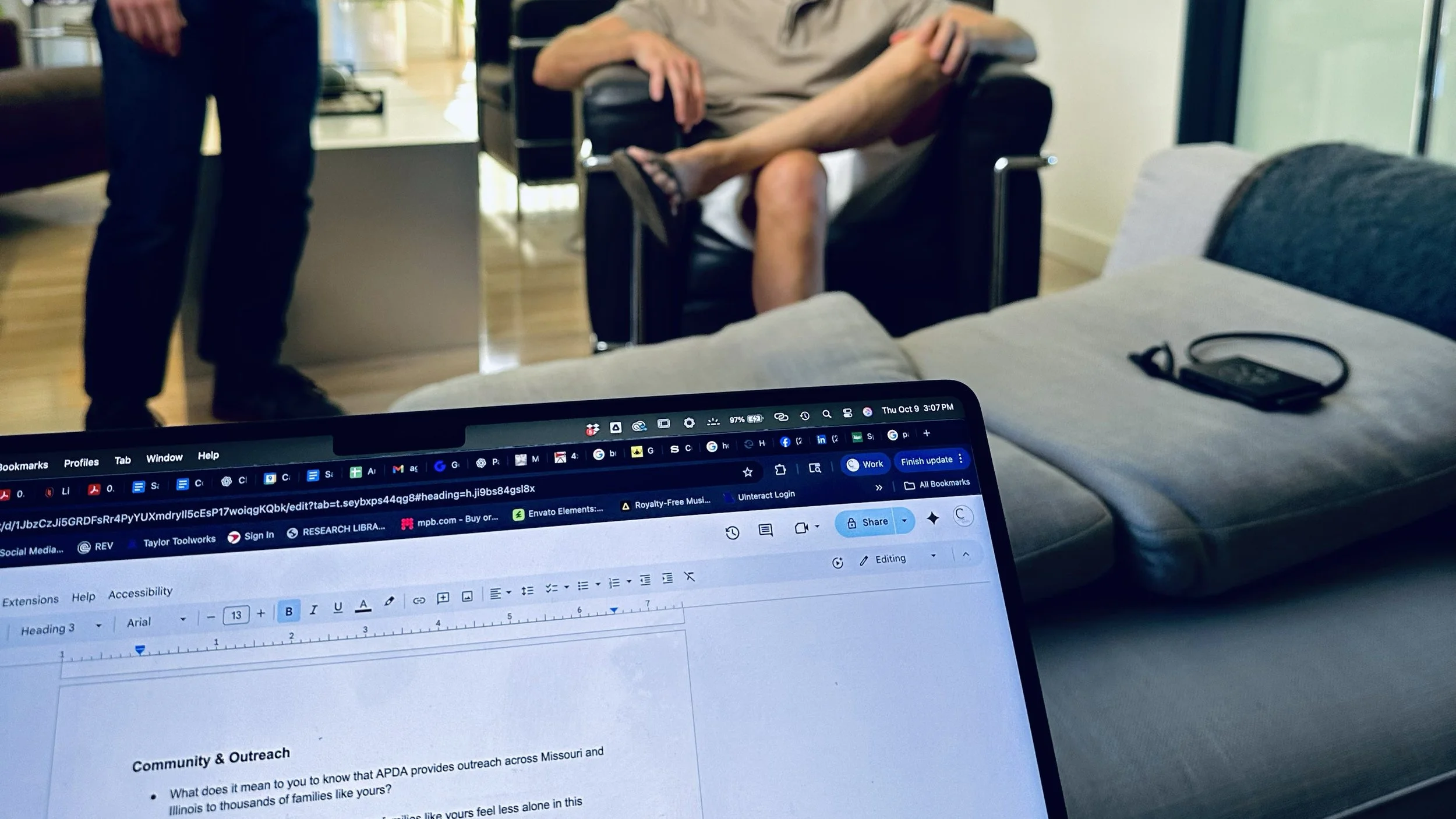
I had the whole interview mapped out by the time we got to David’s house for the interviews. Questions for David, for Mike and for the two of them together. His early signs of PD, the diagnosis and how the programs the APDA offers have changed their lives. I was more prepared than ever, that’s a good thing right?
I wasn’t 3 minutes into the first interview with David when I realized my whole gameplan had just been blown to pieces.
Now this wasn’t a bad thing, quite the opposite once I realized what was happening. David was excited, his positive demeanor gave a genuine eagerness to tell his story. He moved through it with an elegance I was not expecting and I didn’t want to interrupt it. He was flowing through the prompts and questions I was going to ask, not in the order I was planning but it flowed because it was coming from him, from his heart.
Rather than try to get him back on my “track” of how I thought this would go, I stopped, stayed quiet and listened.
This wasn’t a Q&A series type video and my job changed in an instant from being the one that was conducting the interview to being the one to guide it. There was an energy in the room that I didn’t want to disrupt and I wanted to keep David comfortable and gently direct the conversation and mostly stay out of the way. The worst thing I could do when someone is willing to be vulnerable on camera is stop them mid thought so I can check some boxes off of a list of questions.
Mike’s interview was next. Knowing how David’s had gone I decided to follow suit and have the same approach with Mike. His was very similar and by the time they both sat down, they had both let their guard down. The opening scene of the video starts with me asking how Parkinson’s has affected their relationship. David starts giggling and Mike quickly says, “It’s made it stronger, there’s no question about it.”
There’s no way I could have written that. That one was written with the pen of life.
That day changed how I approach conducting interviews.
Now don’t get me wrong, I will write out questions, still have a structure because all of the pre-pro work we do creates the conditions for moments like this to happen. What has changed now is I’m way looser with the structure and leave room for the subject to speak. My job is to keep them comfortable, be a guide to the conversation and welcome unplanned moments that so often arise.
Keeping people comfortable on set is crucial. Most people aren’t used to all the lights, cameras and crew that it takes to pull this off and the moment they get nervous they can lock up. You can feel it in the room and see it on their face. It becomes a performance and not a conversation. I like to start by getting them to talk about natural things, joke around or even hint at some of the questions I know they are going to like. This gives me a feel for how they are going to be during the interview and how they react to the more challenging parts of the interview. I also like to have them circle back to key insights just to have an alternative way to say a thought, my editors appreciate this one! Each project refines the process and we try to get better each time.
Not every project is going to be like what we did for the APDA and brands have real needs for the content we create from these interviews. Sometimes we need to stay pretty rigid to the interview questions, especially if it is part of an ongoing series.
What I have found works really well in these situations is to let the structured questions actually be what loosens up the interview. Let those questions that the subject obviously knows be what gets them comfortable. The brand gets what they need and it gives me the time to connect with the subject and I start to understand who they are and where they are coming from. After this I like to go off script a bit, or have them approach a question in a different way and this is something the brand wasn’t expecting to get.
Those unexpected, and unscripted answers are the little extras we love to create for the brands we work with and many times this is the most usable clips from the interviews. It’s always nice to be able to give a little more than what was expected and show that you are actually paying attention to what the brand needs.
The questions are just the guide. The real answers are written with the pen of life.